


en
en v
Phone
Cart0 Tickets
Total: 0
Account
Calendar
Search
Menu
X

Adriana Lecouvreur

VenueTeatro La Fenice
CalendarFri 22 Oct 2027 - Sat 30 Oct 2027
Synopsis/Details

Synopsis

Place: Paris
Time: 1730
 

Act 1

Backstage at the Comédie-Française

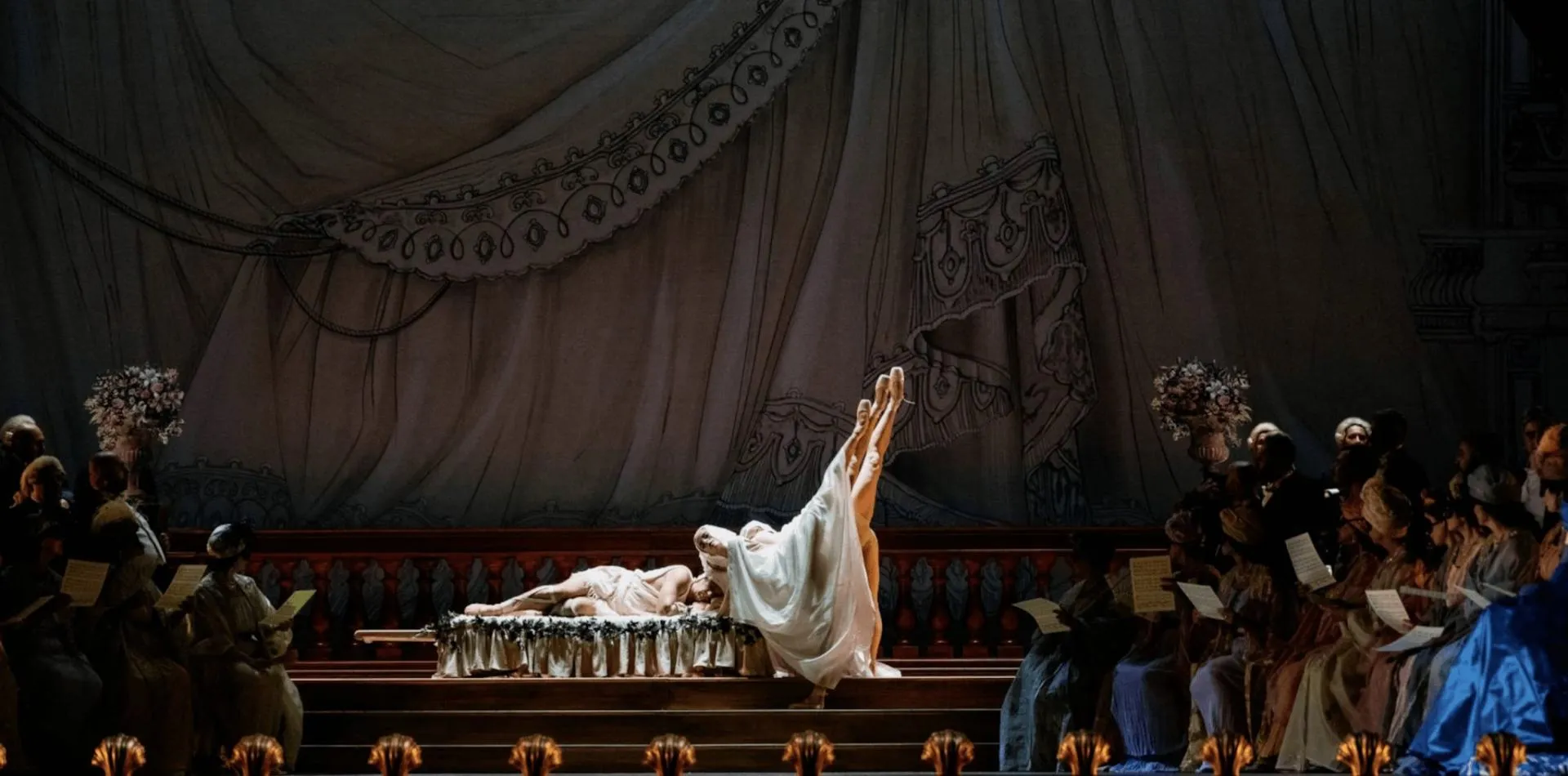
Preparing for a performance, the company bustle around Michonnet, the stage manager. The Prince de Bouillon, admirer of the actress Duclos, is with his companion, the Abbé. Adriana enters reciting. Complimented, she sings 'Io son l'umile ancella' ("I am the humble servant of the creative spirit"). The Prince hears that Duclos is writing a letter, and arranges for its interception. Left alone with Adriana, Michonnet wants to express his love for her. However, Adriana explains she has a lover: Maurizio, a soldier in the service of the Count of Saxony. She is unaware that Maurizio is in reality the count himself. He enters and declares his love for Adriana, 'La dolcissima effigie'. They agree to meet after the performance. Adriana gives him some violets to put in his buttonhole. The Prince and the Abbé return. They have obtained the letter from Duclos, in which she requests a meeting with Maurizio later that evening near the Prince's villa. The Prince decides to arrange a party for the company at the villa in order to expose Duclos and Maurizio. He sends Duclos's letter on to Maurizio, who then cancels his appointment with Adriana. After receiving his notification on stage, she agrees to join the Prince's party.


Act 2

A villa by the Seine

The Princess de Bouillon, not the actress Duclos, is waiting for Maurizio and expresses her love for him: 'Acerba voluttà, dolce tortura'. When he enters, she sees the violets and asks how he came by them. Maurizio presents them to her. Nevertheless, despite being grateful for her help at court, he admits he no longer loves her. Although she guesses he has a lover, he won't reveal her name. The Prince and the Abbé suddenly arrive and the Princess hides. Maurizio realizes they think he is with Duclos. Adriana enters and learns Maurizio's true identity. He tells Adriana the assignation was political. They must arrange the escape of the woman who is in hiding. Adriana trusts him and agrees to help. During the intermezzo that follows, the house is darkened, which Adriana uses to tell the Princess she can escape. However, the two women are mutually suspicious and the rescue attempt turns into a blazing quarrel before the Princess finally leaves. The stage manager Michonnet notices that the Princess has dropped a bracelet, which he gives to Adriana.


Act 3

The Hôtel de Bouillon

Maurizio has been imprisoned for debt, whilst the Princess is desperate to discover the identity of her rival. The Prince, who has an interest in chemistry, is storing a powerful poison that the government has asked him to analyze. At a reception given by the Prince and Princess, guests note the arrival of Michonnet and Adriana. The Princess thinks she recognizes the latter's voice. When the Princess announces that Maurizio has been wounded in a duel, Adriana faints. However, soon afterwards, when Maurizio enters uninjured, Adriana is ecstatic. He sings of his war exploits, 'Il russo Mencikoff'. A ballet is performed: the 'Judgement of Paris'. Adriana learns that the bracelet Michonnet found belongs to the Princess. In growing recognition that they are rivals for Maurizio's affection, the Princess and Adriana challenge each other. When the former pointedly suggests that Adriana should recite a scene from 'Ariadne abandoned', the Prince asks instead for a scene from Phèdre. Adriana uses the final lines of the text to make a headstrong attack on the Princess, who determines to have her revenge.


Act 4

A room in Adriana's house

Michonnet is waiting. Adriana is consumed with anger and jealousy. Members of the theatre company come to visit her, bringing her presents on her name day and trying to persuade her to return to the theatre. Michonnet has retrieved a diamond necklace, previously pawned by Adriana to help Maurizio pay off his debts. A casket is delivered with a note from Maurizio. Adriana looks at the note and immediately feels unwell. She looks in the box and takes out the faded violets that she had once given Maurizio in the theatre. She is hurt that he should send them back to her. She kisses the flowers, 'Poveri fiori', and throws them in the fire. Maurizio enters. He wishes to marry her. Although they embrace, he realises she is shaking. Maurizio tells her that he didn't send the flowers. She becomes deranged. Michonnet and Maurizio realize that she has been poisoned. For a moment, she becomes lucid again, 'ecco la luce', but then dies.

Cast

Adriana Lecouvreur by Francesco Cilea

La Fenice Orchestra & Choir
Conductor Riccardo Frizza
Director Mario Pontiggia

Teatro di Cagliari and Abao Bilbao Opera staging

Venue
Teatro La Fenice


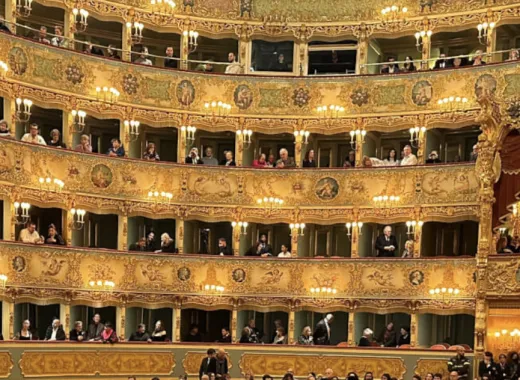
Teatro La Fenice ("The Phoenix") is an opera house in Venice, Italy. It is one of the most famous theatres in Europe, the site of many famous operatic premieres. Its name reflects its role in permitting an opera company to "rise from the ashes" despite losing the use of two theatres (to fire and legal problems respectively). Since opening and being named La Fenice, it has burned and been rebuilt twice more.


The Teatro La Fenice was founded in 1792. In the nineteenth century, the theatre staged the world premieres of numerous operas, including Rossini’sTancredi, Sigismondo and Semiramide, Bellini’s I Capuleti e i Montecchi (The Capulets and the Montagues) and Beatrice di Tenda, Donizetti’sBelisario (Belisarius), Pia de’ Tolomei, and Maria de Rudenz, and Verdi’s Ernani, Attila, Rigoletto, La traviata and Simon Boccanegra. 


In the last century, the Fenice has also placed a special emphasis on contemporary productions, welcoming the world premieres of Stravinski’s The Rake’s Progress, Britten’s The Turn of the Screw, Prokofiev’s L’angelo di fuoco (The Fiery Angel), Nono’s Intolleranza (Intolerance) and Maderna’s Hyperion. Recent premieres have included Kagel’s Entführung im Konzertsaal (Kidnapping in the Concert Hall), Guarnieri’s Medea, Mosca’s Signor Goldoni and Ambrosini’s Il killer di parole (The Killer of Words). 

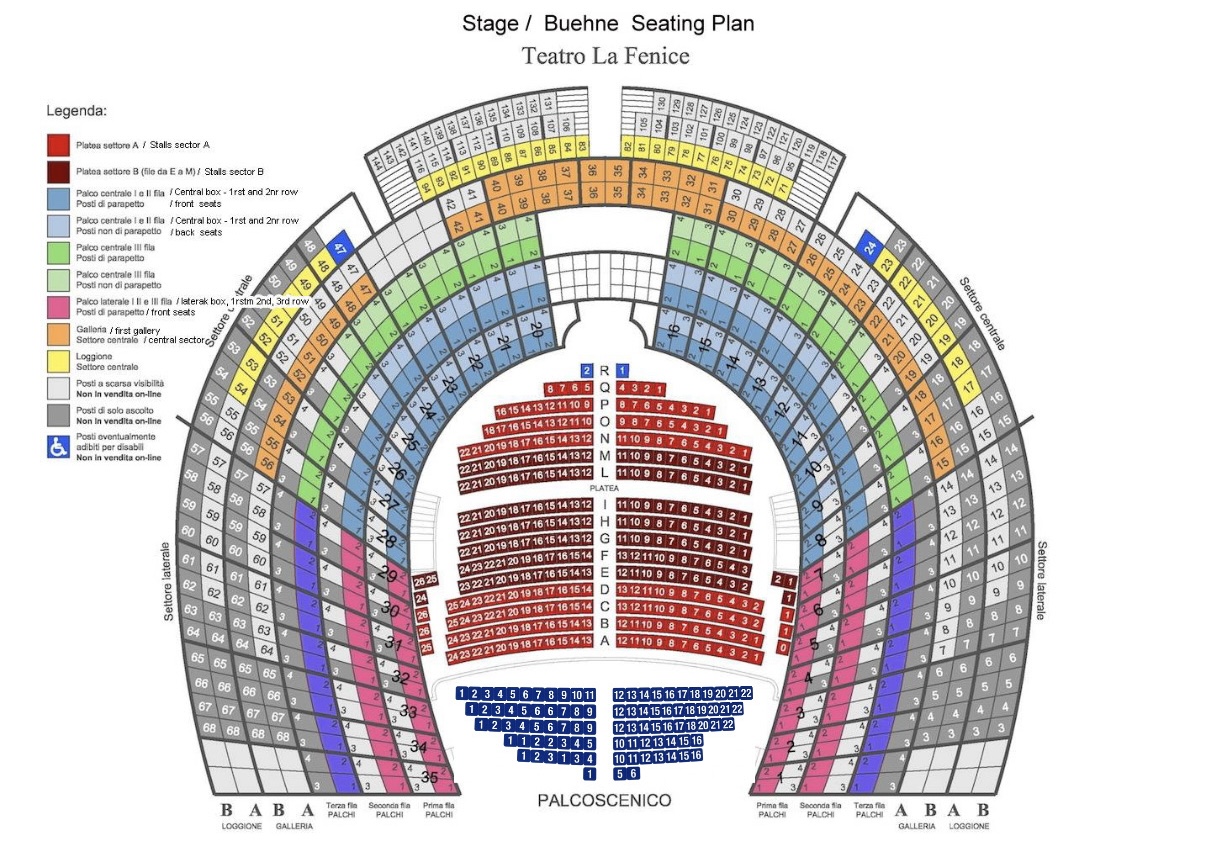
With a seating capacity for over one thousand people, the Fenice boasts excellent acoustics (which were improved when the theatre was rebuilt after the devastating fire of 1996), a 98-member orchestra and 66-person opera chorus, a dedicated local audience and a large international following. The theatre is a leading creative venue, staging more than one hundred opera performances per year, a major symphonic season conducted by prominent conductors from across the globe (including frequent collaborations with Myung-Whun Chung, Riccardo Chailly, Jeffrey Tate, Vladimir Temirkanov and Dmitrij Kitajenko), the full cycles of symphonies by Beethoven, Schumann, Brahms and Mahler, a contemporary repertoire focused especially on Venetian artists such as Nono and Maderna, ballets, and chamber music concerts. 

The theatre is owned by the Municipality of Venice and managed by the Fondazione Teatro La Fenice, a private body whose members include the State of Italy, the Veneto region, the Municipality of Venice and numerous public and private institutions. The foundation also runs a second theatre, the Teatro Malibran (formerly known as the Teatro di San Giovanni Grisostomo), which dates back to 1678.

The leadership of the Fondazione includes General Manager Cristiano Chiarot, Artistic Director Fortunato Ortombina, Principal Conductor Diego Matheuz and Chorus Master Claudio Marino Moretti.


Transport


Vaporetto 
from Tronchetto: line 2 
toward Rialto bridge, St Mark and Lido  

from Piazzale Roma and the Santa Lucia train station: line 1 or line 2 
toward Rialto bridge, St Mark and Lido  

stops: take line 1 to Rialto bridge, St Angel, St Samuel or St Mark (Vallaresso); 
or take line 2 to Rialto bridge or St Mark (Vallaresso)  


Alilaguna public transportation service from the Marco Polo airport - take the orange line to Rialto bridge or the blue line to St Mark (Vallaresso)
 

Parking: although you can drive to Venice, cars, bicycles and mopeds are not permitted in the city. You can leave your vehicle in one of the parking garages on Tronchetto or in Piazzale Roma: 


Entrances

La Fenice Opera House has two entrances: 
- the stage door is for theatre staff and performers only and is manned by a doorman;
- the main entrance


Lifts

The boxes, gallery and family circle can be reached via elevators

Access 

The theatre complies with all legal regulations regarding special needs accessibility. 

Accomodation

Buy now

Gift vouchers

Gift someone an unforgettable night at the opera.
Choose a gift coupon and let them pick the performance they love—music, drama, and world-class artistry, all in one elegant experience.
Venezia Opera Tickets
Facebook Instagram
Payment
© 2026 RM Europa Ticket GmbH
Whatsapp