
en
en v
Phone
Cart0 Tickets
Total: 0
Account
Calendar
Search
Menu
X

Fedora

VenueTeatro La Fenice
CalendarFri 13 Nov 2026 - Sun 22 Nov 2026
Synopsis/Details

Fedora – Umberto Giordano | Opera
New production by the Teatro La Fenice Foundation
Evening dress is required for the opening night on Friday, 13 November 2025.


Synopsis


Act 1

St. Petersburg, 1881. A winter's night in the palace of Count Vladimir Andrejevich

Princess Fedora, who is to marry Count Vladimir Andrejevich the following day, arrives and sings of her love for him ("Quanti fior ... Ed ecco il suo ritratto"), unaware that the dissolute Vladimir has betrayed her with another woman. The sound of sleigh-bells is heard and Vladimir is brought in, mortally wounded. Doctors and a priest are summoned, and the servants are questioned (Dimitri: "Signore, alle otto e mezzo"; Cirillo: "Egli mi disse"). Fedora swears on the jeweled Byzantine cross she is wearing (aria: "Dite coragio ... Su questa santa Croce") that Andrejevich's death will be avenged. It is proposed that Count Loris Ipanov, a suspected Nihilist sympathizer, was probably the assassin. De Siriex (a diplomat) and Gretch (a police inspector) plan an investigation.


Act 2

Paris

Fedora has followed Ipanov to Paris to avenge Vladimir's death. There is a reception at Fedora's house, where the Countess Olga Sukarev introduces the virtuoso Polish pianist Boleslao Lazinski. De Siriex sings about Russian women ("La donna russa è femmina due volte"); Olga counters with an aria comparing Parisian gentlemen with the wine of the widow Veuve Clicquot ("Eccone un altro più somigliante ancor"). Ipanov arrives and declares his love for Fedora ("Amor ti vieta"). While Lazinski plays for the party-goers, Fedora tells Ipanov that she is returning to Russia the following day. He is desperate because he has been exiled from Russia and cannot follow her; he confesses that he killed Vladimir. Fedora asks him to return after the reception is over to tell her the whole story. When she is alone, Fedora writes a letter to the chief of the Imperial Police in Russia accusing Ipanov of Vladimir's murder. Ipanov returns and explains that he killed Vladimir because Vladimir and Ipanov's wife Wanda were lovers. Ipanov had discovered them together. Vladimir shot at Ipanov and wounded him. Ipanov returned fire, killing Vladimir. Fedora realizes that she has fallen in love with Ipanov and that he killed not for political ends, but to defend himself and his honor. They embrace and she convinces him to spend the night with her.


Act 3

The Bernese Oberland in Switzerland

Ipanov and Fedora are now lovers (his brief aria: "Te sola io guardo") and living in her villa. With them is her friend, Olga, who sings an aria about bicycling ("Se amor ti allena", sometimes omitted). De Siriex arrives. He teases Olga about her previous lover Lazinski ("Fatevi cor, Contessa!") and invites her on a bicycle ride. He tells Fedora that as a result of the letter she wrote to the police chief, Ipanov's brother Valeriano was arrested for his role in the plot to murder Vladimir and imprisoned in a fortress on the Neva river. One night the river flooded and Valeriano drowned. When Ipanov's mother heard the news, she collapsed and died. Fedora is anguished – she has caused two deaths ("Dio di giustizia"). Ipanov receives a letter from a friend in Russia informing him of his mother's and brother's deaths and that the cause was a woman living in Paris who had written a letter denouncing him to the police. Fedora confesses to writing the letter and begs Ipanov's forgiveness. When he initially refuses and curses her, Fedora swallows poison which she keeps hidden in the cross she always wears. Ipanov begs the doctor to save her but it is too late. Fedora dies in Ipanov's arms.

Cast

Orchestra and Chorus of La Fenice Theatre
Conductor: Donato Renzetti
Stage Director: Hugo de Ana

Venue
Teatro La Fenice


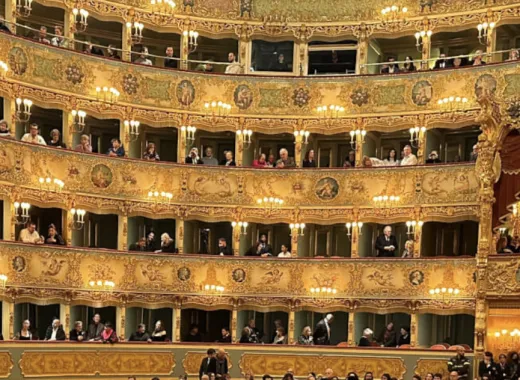
Teatro La Fenice ("The Phoenix") is an opera house in Venice, Italy. It is one of the most famous theatres in Europe, the site of many famous operatic premieres. Its name reflects its role in permitting an opera company to "rise from the ashes" despite losing the use of two theatres (to fire and legal problems respectively). Since opening and being named La Fenice, it has burned and been rebuilt twice more.


The Teatro La Fenice was founded in 1792. In the nineteenth century, the theatre staged the world premieres of numerous operas, including Rossini’sTancredi, Sigismondo and Semiramide, Bellini’s I Capuleti e i Montecchi (The Capulets and the Montagues) and Beatrice di Tenda, Donizetti’sBelisario (Belisarius), Pia de’ Tolomei, and Maria de Rudenz, and Verdi’s Ernani, Attila, Rigoletto, La traviata and Simon Boccanegra. 


In the last century, the Fenice has also placed a special emphasis on contemporary productions, welcoming the world premieres of Stravinski’s The Rake’s Progress, Britten’s The Turn of the Screw, Prokofiev’s L’angelo di fuoco (The Fiery Angel), Nono’s Intolleranza (Intolerance) and Maderna’s Hyperion. Recent premieres have included Kagel’s Entführung im Konzertsaal (Kidnapping in the Concert Hall), Guarnieri’s Medea, Mosca’s Signor Goldoni and Ambrosini’s Il killer di parole (The Killer of Words). 

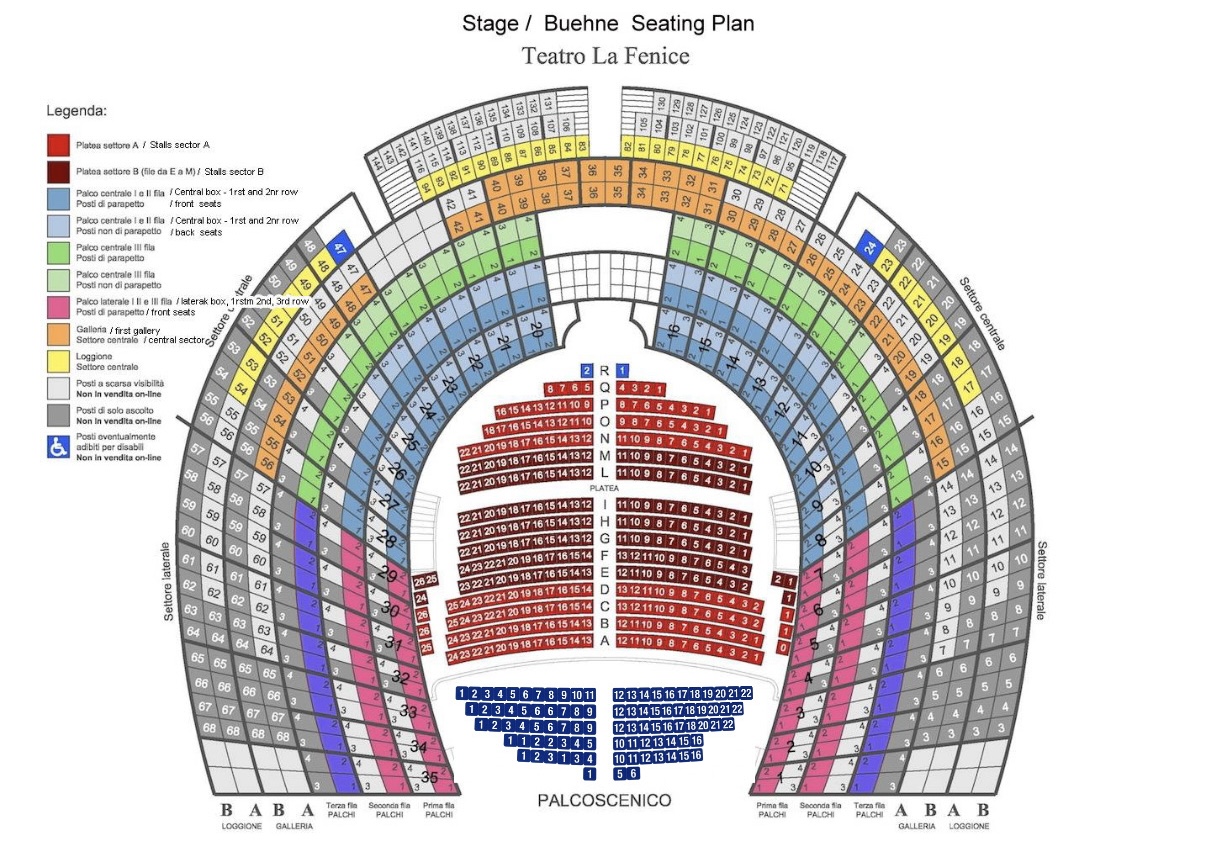
With a seating capacity for over one thousand people, the Fenice boasts excellent acoustics (which were improved when the theatre was rebuilt after the devastating fire of 1996), a 98-member orchestra and 66-person opera chorus, a dedicated local audience and a large international following. The theatre is a leading creative venue, staging more than one hundred opera performances per year, a major symphonic season conducted by prominent conductors from across the globe (including frequent collaborations with Myung-Whun Chung, Riccardo Chailly, Jeffrey Tate, Vladimir Temirkanov and Dmitrij Kitajenko), the full cycles of symphonies by Beethoven, Schumann, Brahms and Mahler, a contemporary repertoire focused especially on Venetian artists such as Nono and Maderna, ballets, and chamber music concerts. 

The theatre is owned by the Municipality of Venice and managed by the Fondazione Teatro La Fenice, a private body whose members include the State of Italy, the Veneto region, the Municipality of Venice and numerous public and private institutions. The foundation also runs a second theatre, the Teatro Malibran (formerly known as the Teatro di San Giovanni Grisostomo), which dates back to 1678.

The leadership of the Fondazione includes General Manager Cristiano Chiarot, Artistic Director Fortunato Ortombina, Principal Conductor Diego Matheuz and Chorus Master Claudio Marino Moretti.


Transport


Vaporetto 
from Tronchetto: line 2 
toward Rialto bridge, St Mark and Lido  

from Piazzale Roma and the Santa Lucia train station: line 1 or line 2 
toward Rialto bridge, St Mark and Lido  

stops: take line 1 to Rialto bridge, St Angel, St Samuel or St Mark (Vallaresso); 
or take line 2 to Rialto bridge or St Mark (Vallaresso)  


Alilaguna public transportation service from the Marco Polo airport - take the orange line to Rialto bridge or the blue line to St Mark (Vallaresso)
 

Parking: although you can drive to Venice, cars, bicycles and mopeds are not permitted in the city. You can leave your vehicle in one of the parking garages on Tronchetto or in Piazzale Roma: 


Entrances

La Fenice Opera House has two entrances: 
- the stage door is for theatre staff and performers only and is manned by a doorman;
- the main entrance


Lifts

The boxes, gallery and family circle can be reached via elevators

Access 

The theatre complies with all legal regulations regarding special needs accessibility. 

Accomodation

Buy now

Gift vouchers

Gift someone an unforgettable night at the opera.
Choose a gift coupon and let them pick the performance they love—music, drama, and world-class artistry, all in one elegant experience.
Venezia Opera Tickets
Facebook Instagram
Payment
© 2026 RM Europa Ticket GmbH
Whatsapp