

en
en v
Phone
Cart0 Tickets
Total: 0
Account
Calendar
Search
Menu
X

Jenůfa

VenueTeatro La Fenice
CalendarFri 12 Mar 2027 - Sat 20 Mar 2027
Synopsis/Details

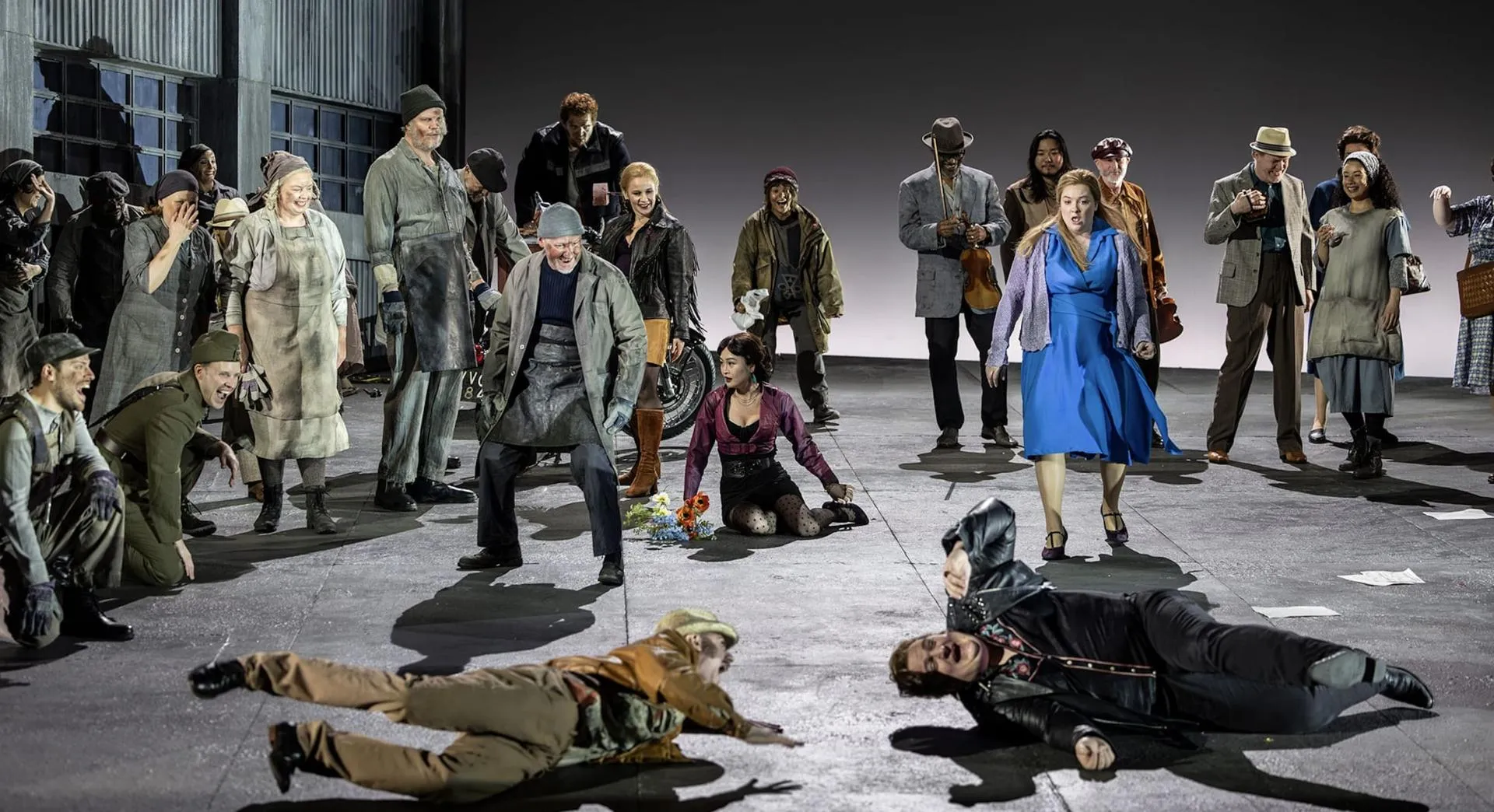
Jenůfa – Leoš Janáček | Opera
Production by the English National Opera


Synopsis

Place: A Moravian village

Time: the nineteenth century

The plot depends on a tangled set of village relationships. Before the opera begins, the mill-owner Grandmother Buryja had two sons. The elder married the widow of a man named Klemeň, became stepfather to her son Laca, and had a son of his own with her, Števa. The younger married twice, and had a daughter, Jenůfa, with his first wife. When the opera opens, Grandmother Buryja's sons and their wives have died, except for the Kostelnička (the sacristan or sextoness of the village church), the younger son's second wife and Jenůfa's stepmother.[8] Custom dictates that Števa alone, as the elder son's only child, will inherit the mill, leaving his half-brother Laca and cousin Jenůfa to earn their livings.


Act 1

Jenůfa, Laca, and Grandmother Buryja wait for Števa to return home. Jenůfa, in love with Števa and secretly pregnant with his child, worries that he may have been drafted into the army. Laca, in love with Jenůfa, expresses bitterness against his half-brother's favored position at home. As he complains he plays with a knife and, finding it blunt, gives it to the mill foreman to be sharpened.

The foreman informs the family that Števa has not been drafted, to Jenůfa's relief and Laca's increased frustration. The others leave, and Jenůfa waits to greet Števa. He appears with a group of soldiers, drunk and boasting of his prowess with the girls. He calls for music and drags the miserable Jenůfa into dancing with him.

The Kostelnička steps into this rowdy scene, silences the musicians and, shocked by Števa's behavior, forbids him to marry Jenůfa until he can stay sober for one full year. The soldiers and the family leave Števa and Jenůfa alone, and she begs him to love her, but he, unaware of her pregnancy, gives her casual answers and leaves.

Laca returns, as bitter as ever. He attempts to goad Jenůfa into criticizing Števa, but she takes her lover's side despite everything. Laca rages that Števa would never even look at her if it weren't for her rosy cheeks, then slashes her across the cheek with his knife.


Act 2

Months later, it is winter. The baby has been born, but Števa has not yet come to visit his child. Jenůfa's face is still disfigured, but she is happy in her love for the baby. While Jenůfa sleeps, the Kostelnička summons Števa and demands that he take responsibility. He answers that while he will provide money in secret, no one must know the baby is his. His love for Jenůfa died when Laca spoiled her beauty, and he is now engaged to marry Karolka, the mayor's pretty daughter.

Števa leaves, and Laca enters. He still doesn't know the truth about the baby, and when the Kostelnička tells him, his first reaction is disgust at the thought of taking Števa's child under his wing. Fearful that Jenůfa will be left with no one to marry, Kostelnička hastily lies that the baby is dead. Laca leaves, and the Kostelnička is faced with the necessity of making the lie true. She wraps the baby in a shawl and leaves the house.

Jenůfa wakes up and says a prayer for her child's future, but the Kostelnička, returning, tells her that the baby died while she slept. Laca appears and comforts Jenůfa gently, asking that they spend the rest of their lives together. Seeing the tenderness of the couple, the Kostelnička tries to convince herself that she has acted for the best.


Act 3

It is now spring, and Laca and Jenůfa's wedding day. All seems right again, except that the Kostelnička is a nervous wreck. Števa and Karolka visit, and a chorus of village girls sings a wedding song. Just then, screams are heard. The body of the baby has been discovered in the mill-stream under the melting ice. Jenůfa immediately says that the baby is hers, and in her grief appears guilty of the murder. The village is ready to exact immediate justice against Jenůfa, but the Kostelnička calms them and says that the crime is hers. Hearing the whole story, Jenůfa forgives her stepmother. The crowd takes the Kostelnička off to jail. Jenůfa and Laca are left alone. Jenůfa asks Laca to leave her, as she cannot expect him to marry her now. He replies that he will not leave her, and that he wishes to spend the rest of his life with her.

Cast

Starenka Buryjovka: Manuela Custer
Laca Klemeň: John Findon
Števa Buryja: Edgaras Montvidas
Kostelnicka Buryjovka: Ingela Brimberg
Jenůfa: Joyce El-Khoury
Stárek: Dalibor Jenis


Orchestra and Chorus of La Fenice Theatre
Conductor: Andriy Yurkevych
Stage direction: David Alden
Set design: Charles Edwards
Costumes: Jon Morrell
Lighting: Adam Silverman
Choreographic movement: Maxine Braham


Production of the English National Opera

Venue
Teatro La Fenice


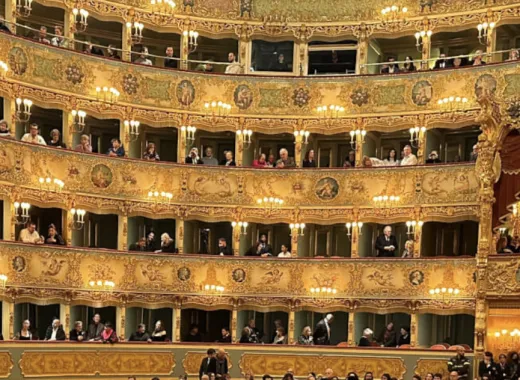
Teatro La Fenice ("The Phoenix") is an opera house in Venice, Italy. It is one of the most famous theatres in Europe, the site of many famous operatic premieres. Its name reflects its role in permitting an opera company to "rise from the ashes" despite losing the use of two theatres (to fire and legal problems respectively). Since opening and being named La Fenice, it has burned and been rebuilt twice more.


The Teatro La Fenice was founded in 1792. In the nineteenth century, the theatre staged the world premieres of numerous operas, including Rossini’sTancredi, Sigismondo and Semiramide, Bellini’s I Capuleti e i Montecchi (The Capulets and the Montagues) and Beatrice di Tenda, Donizetti’sBelisario (Belisarius), Pia de’ Tolomei, and Maria de Rudenz, and Verdi’s Ernani, Attila, Rigoletto, La traviata and Simon Boccanegra. 


In the last century, the Fenice has also placed a special emphasis on contemporary productions, welcoming the world premieres of Stravinski’s The Rake’s Progress, Britten’s The Turn of the Screw, Prokofiev’s L’angelo di fuoco (The Fiery Angel), Nono’s Intolleranza (Intolerance) and Maderna’s Hyperion. Recent premieres have included Kagel’s Entführung im Konzertsaal (Kidnapping in the Concert Hall), Guarnieri’s Medea, Mosca’s Signor Goldoni and Ambrosini’s Il killer di parole (The Killer of Words). 

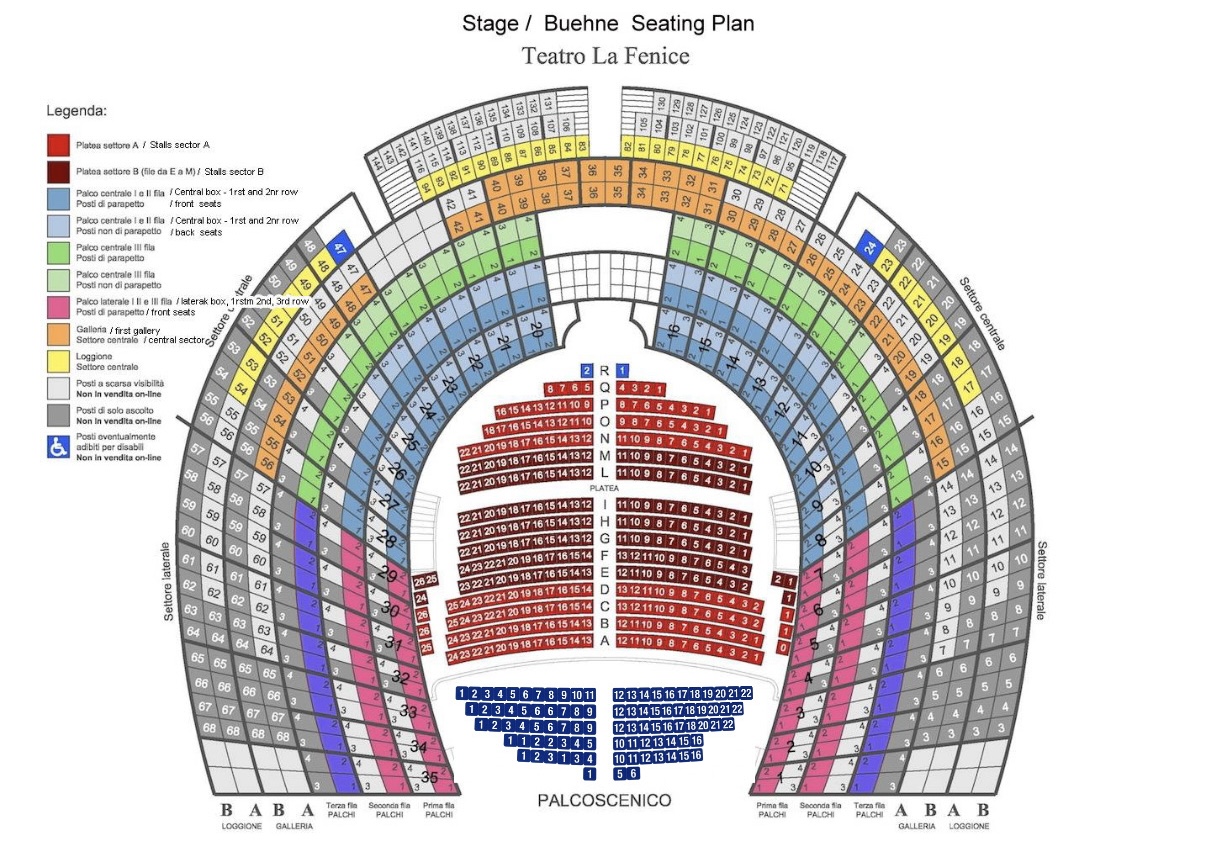
With a seating capacity for over one thousand people, the Fenice boasts excellent acoustics (which were improved when the theatre was rebuilt after the devastating fire of 1996), a 98-member orchestra and 66-person opera chorus, a dedicated local audience and a large international following. The theatre is a leading creative venue, staging more than one hundred opera performances per year, a major symphonic season conducted by prominent conductors from across the globe (including frequent collaborations with Myung-Whun Chung, Riccardo Chailly, Jeffrey Tate, Vladimir Temirkanov and Dmitrij Kitajenko), the full cycles of symphonies by Beethoven, Schumann, Brahms and Mahler, a contemporary repertoire focused especially on Venetian artists such as Nono and Maderna, ballets, and chamber music concerts. 

The theatre is owned by the Municipality of Venice and managed by the Fondazione Teatro La Fenice, a private body whose members include the State of Italy, the Veneto region, the Municipality of Venice and numerous public and private institutions. The foundation also runs a second theatre, the Teatro Malibran (formerly known as the Teatro di San Giovanni Grisostomo), which dates back to 1678.

The leadership of the Fondazione includes General Manager Cristiano Chiarot, Artistic Director Fortunato Ortombina, Principal Conductor Diego Matheuz and Chorus Master Claudio Marino Moretti.


Transport


Vaporetto 
from Tronchetto: line 2 
toward Rialto bridge, St Mark and Lido  

from Piazzale Roma and the Santa Lucia train station: line 1 or line 2 
toward Rialto bridge, St Mark and Lido  

stops: take line 1 to Rialto bridge, St Angel, St Samuel or St Mark (Vallaresso); 
or take line 2 to Rialto bridge or St Mark (Vallaresso)  


Alilaguna public transportation service from the Marco Polo airport - take the orange line to Rialto bridge or the blue line to St Mark (Vallaresso)
 

Parking: although you can drive to Venice, cars, bicycles and mopeds are not permitted in the city. You can leave your vehicle in one of the parking garages on Tronchetto or in Piazzale Roma: 


Entrances

La Fenice Opera House has two entrances: 
- the stage door is for theatre staff and performers only and is manned by a doorman;
- the main entrance


Lifts

The boxes, gallery and family circle can be reached via elevators

Access 

The theatre complies with all legal regulations regarding special needs accessibility. 

Accomodation

Buy now

Gift vouchers

Gift someone an unforgettable night at the opera.
Choose a gift coupon and let them pick the performance they love—music, drama, and world-class artistry, all in one elegant experience.
Venezia Opera Tickets
Facebook Instagram
Payment
© 2026 RM Europa Ticket GmbH
Whatsapp