


en
en v
Phone
Cart0 Tickets
Total: 0
Account
Calendar
Search
Menu
X

Giselle

VenueTeatro La Fenice
CalendarWed 12 May 2027 - Sun 16 May 2027
Synopsis/Details

Giselle – Wiener Staatsballett | Dance 2026/27

Music by Adolphe Adam with an insert by Friedrich Burgmüller


Choreography and staging: Elena Tchernichova
Wiener Staatsballett
Company Director: Alessandra Ferri

Conductor: Paul Connelly
Orchestra of Teatro La Fenice


Synopsis


Act I

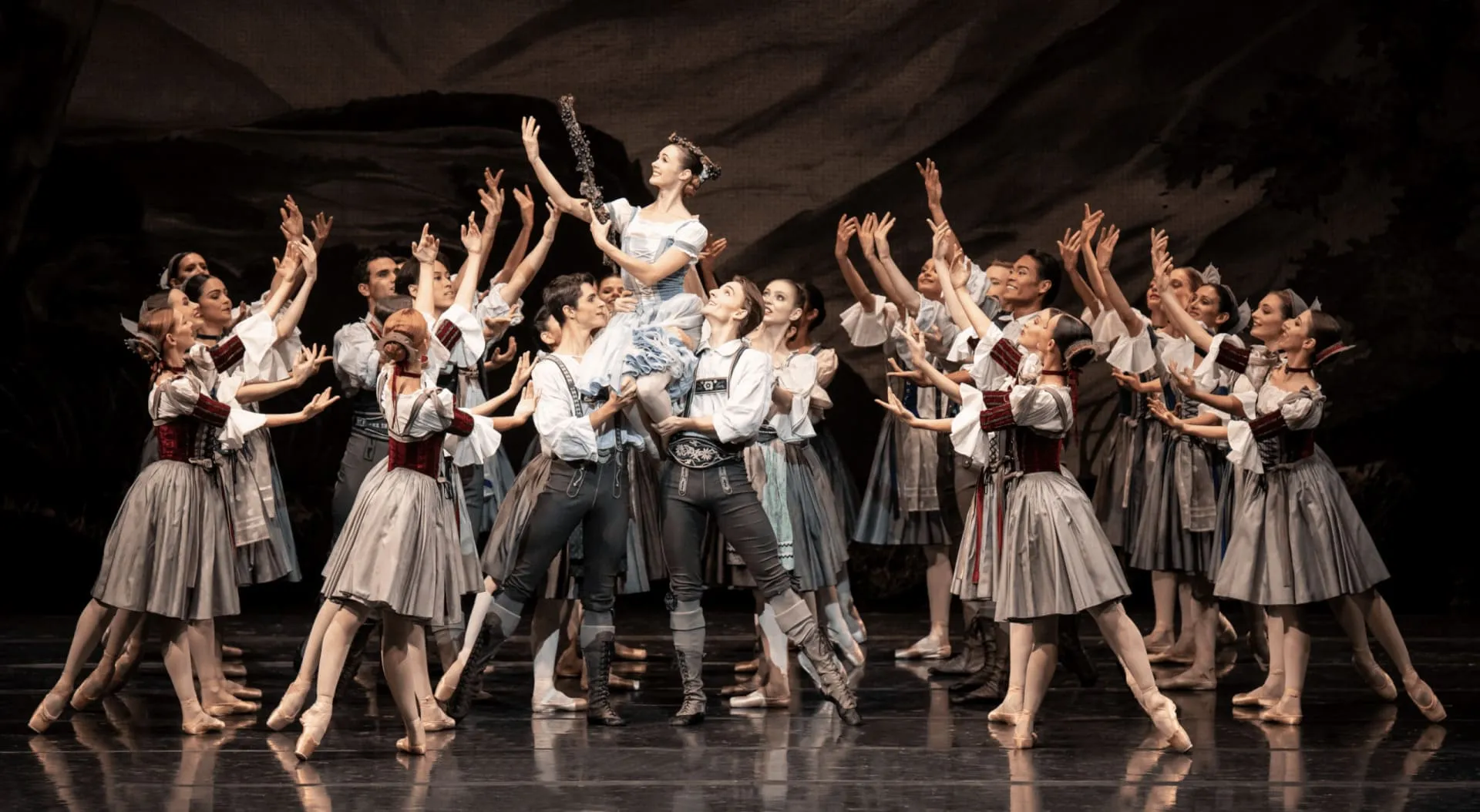
The ballet opens on a sunny autumnal morning in the Rhineland during the Middle Ages. The grape harvest is in progress. Duke Albrecht of Silesia, a young nobleman, has fallen in love with a shy, beautiful peasant girl named Giselle, despite being engaged to Bathilde, the Duke of Courland's daughter. He disguises himself as a humble villager called "Loys" to court the enchanting and innocent Giselle, who knows nothing of his true identity. With the help of his squire, he hides his fine attire, hunting horn, and sword before coaxing her out of her house to romance her as the harvest festivities begin.

Hilarion, a local gamekeeper, is also in love with Giselle and is highly suspicious of the newcomer who has won her affections. He tries to convince her that her beau can not be trusted, but she ignores his warnings. Her mother, Berthe, is very protective of her, as Giselle has a weak heart that leaves her in delicate health. She discourages a relationship between Giselle and Loys, thinking Hilarion would be a better match, and disapproves of her fondness for dancing, due to the strain on her heart.


A party of noblemen seeking refreshment following the rigors of the hunt arrive in the village with Bathilde among them. Albrecht hurries away, knowing he would be recognized and greeted by her, exposing him as a nobleman. The villagers welcome the party, offer them drinks, and perform several dances.[5][6] Bathilde is charmed with Giselle's sweet and demure nature, not knowing of her relationship with Albrecht. Giselle is honored when Bathilde offers her a necklace as a gift before the group of nobles depart.

The villagers continue the harvest festivities, and Albrecht emerges again to dance with Giselle, who is named the Harvest Queen. Hilarion interrupts the festivities. He has discovered Albrecht's finely made sword and presents it as proof that he is really a nobleman who is engaged to another woman. Using Albrecht's hunting horn, Hilarion calls back the party of noblemen. Albrecht has no time to hide and has no choice but to greet Bathilde as his fiancée. All are shocked by the revelation, but none more than Giselle, who becomes inconsolable when faced with his deception. Knowing that they can never be together, she flies into a mad fit of grief in which all the tender moments she shared with Loys flash before her eyes. She begins to dance wildly and erratically, ultimately causing her weak heart to give out. She collapses and dies in Albrecht's arms. Hilarion and Albrecht turn on each other in rage before Albrecht flees the scene in misery. The curtain closes as Berthe weeps over her Giselle's body.


Act II

Late at night, Hilarion mourns at Giselle's forest grave, but is frightened away by the arrival of the Wilis, the ghostly spirits of maidens betrayed by their lovers. Many were abandoned on their wedding days, and all died of broken hearts. They, led by their merciless queen, Myrtha, dance and haunt the forest at night to exact their revenge on any man they encounter, regardless of who he may be, forcing their victims to dance until they die of exhaustion.

Myrtha and the Wilis rouse Giselle's spirit from her grave and induct her into their clan before disappearing into the forest. Albrecht arrives to lay flowers on Giselle's grave and he weeps with guilt over her death. Her spirit appears and he begs her forgiveness. She, her love undiminished unlike her vengeful sisters, gently forgives him. She disappears to join the rest of the Wilis and Albrecht desperately follows her.

Meanwhile, the Wilis have cornered a terrified Hilarion. They use their magic to force him to dance until he is nearly dead, and then drown him in a nearby lake. Then they spy Albrecht, and turn on him, sentencing him to death as well. He pleads to Myrtha for his life, but she coldly refuses. Giselle's pleas are also dismissed and he is forced to dance until sunrise. However, the power of Giselle's love counters the Wilis' magic and spares his life. The other spirits return to their graves at daybreak, but Giselle has broken through the chains of hatred and vengeance that control the Wilis, and is thus released from their powers and will haunt the forest no more. After bidding a tender farewell to Albrecht, she returns to her grave to rest in peace.


Venue
Teatro La Fenice


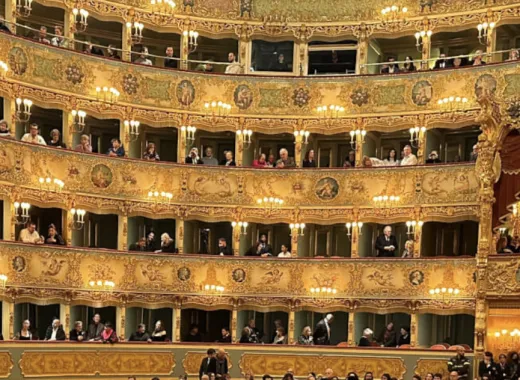
Teatro La Fenice ("The Phoenix") is an opera house in Venice, Italy. It is one of the most famous theatres in Europe, the site of many famous operatic premieres. Its name reflects its role in permitting an opera company to "rise from the ashes" despite losing the use of two theatres (to fire and legal problems respectively). Since opening and being named La Fenice, it has burned and been rebuilt twice more.


The Teatro La Fenice was founded in 1792. In the nineteenth century, the theatre staged the world premieres of numerous operas, including Rossini’sTancredi, Sigismondo and Semiramide, Bellini’s I Capuleti e i Montecchi (The Capulets and the Montagues) and Beatrice di Tenda, Donizetti’sBelisario (Belisarius), Pia de’ Tolomei, and Maria de Rudenz, and Verdi’s Ernani, Attila, Rigoletto, La traviata and Simon Boccanegra. 


In the last century, the Fenice has also placed a special emphasis on contemporary productions, welcoming the world premieres of Stravinski’s The Rake’s Progress, Britten’s The Turn of the Screw, Prokofiev’s L’angelo di fuoco (The Fiery Angel), Nono’s Intolleranza (Intolerance) and Maderna’s Hyperion. Recent premieres have included Kagel’s Entführung im Konzertsaal (Kidnapping in the Concert Hall), Guarnieri’s Medea, Mosca’s Signor Goldoni and Ambrosini’s Il killer di parole (The Killer of Words). 

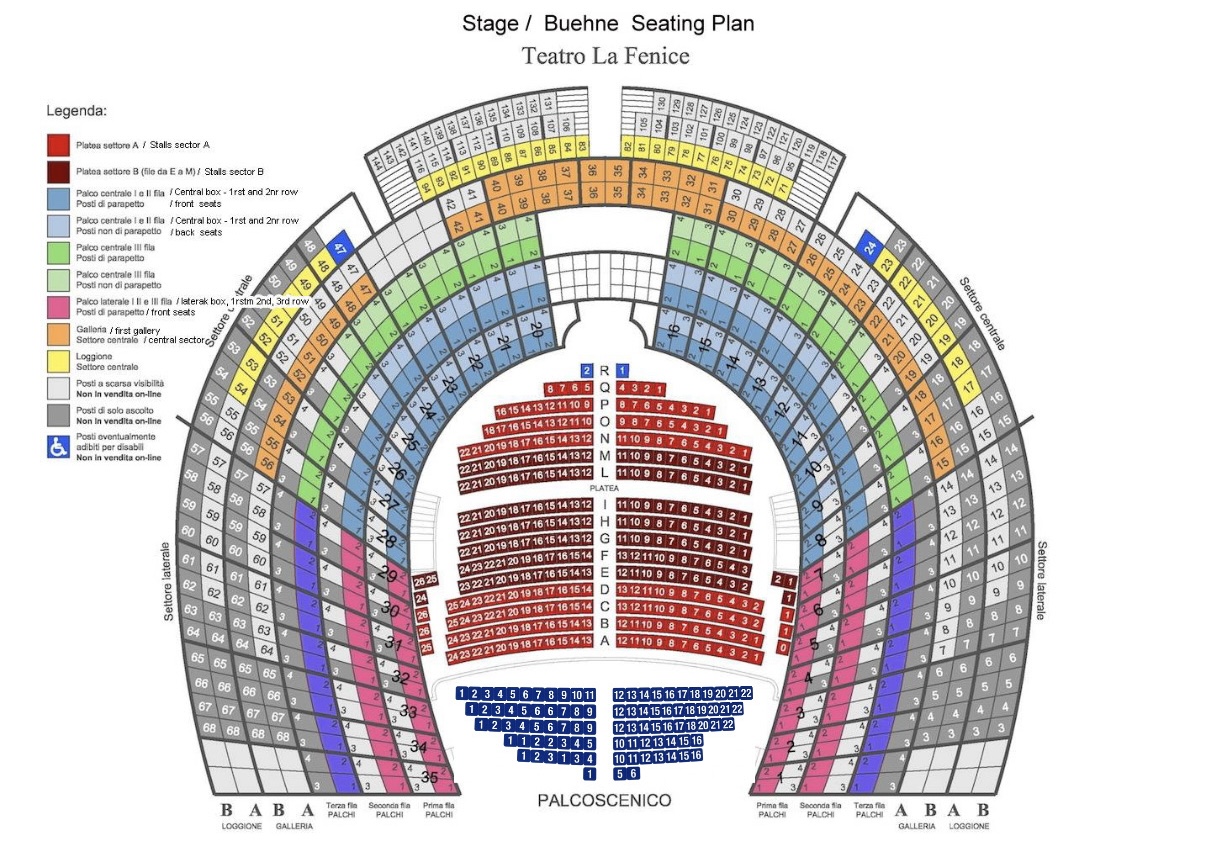
With a seating capacity for over one thousand people, the Fenice boasts excellent acoustics (which were improved when the theatre was rebuilt after the devastating fire of 1996), a 98-member orchestra and 66-person opera chorus, a dedicated local audience and a large international following. The theatre is a leading creative venue, staging more than one hundred opera performances per year, a major symphonic season conducted by prominent conductors from across the globe (including frequent collaborations with Myung-Whun Chung, Riccardo Chailly, Jeffrey Tate, Vladimir Temirkanov and Dmitrij Kitajenko), the full cycles of symphonies by Beethoven, Schumann, Brahms and Mahler, a contemporary repertoire focused especially on Venetian artists such as Nono and Maderna, ballets, and chamber music concerts. 

The theatre is owned by the Municipality of Venice and managed by the Fondazione Teatro La Fenice, a private body whose members include the State of Italy, the Veneto region, the Municipality of Venice and numerous public and private institutions. The foundation also runs a second theatre, the Teatro Malibran (formerly known as the Teatro di San Giovanni Grisostomo), which dates back to 1678.

The leadership of the Fondazione includes General Manager Cristiano Chiarot, Artistic Director Fortunato Ortombina, Principal Conductor Diego Matheuz and Chorus Master Claudio Marino Moretti.


Transport


Vaporetto 
from Tronchetto: line 2 
toward Rialto bridge, St Mark and Lido  

from Piazzale Roma and the Santa Lucia train station: line 1 or line 2 
toward Rialto bridge, St Mark and Lido  

stops: take line 1 to Rialto bridge, St Angel, St Samuel or St Mark (Vallaresso); 
or take line 2 to Rialto bridge or St Mark (Vallaresso)  


Alilaguna public transportation service from the Marco Polo airport - take the orange line to Rialto bridge or the blue line to St Mark (Vallaresso)
 

Parking: although you can drive to Venice, cars, bicycles and mopeds are not permitted in the city. You can leave your vehicle in one of the parking garages on Tronchetto or in Piazzale Roma: 


Entrances

La Fenice Opera House has two entrances: 
- the stage door is for theatre staff and performers only and is manned by a doorman;
- the main entrance


Lifts

The boxes, gallery and family circle can be reached via elevators

Access 

The theatre complies with all legal regulations regarding special needs accessibility. 

Accomodation

Buy now

Gift vouchers

Gift someone an unforgettable night at the opera.
Choose a gift coupon and let them pick the performance they love—music, drama, and world-class artistry, all in one elegant experience.
Venezia Opera Tickets
Facebook Instagram
Payment
© 2026 RM Europa Ticket GmbH
Whatsapp